Skip to content
Donor & transplant testing

The LIS for donorand transplant labs.

bLIS runs the full testing workflow for organ, tissue, and eye banks—accession intake, serology, validation, reporting, and billing—on one connected system.
  • Serology
  • Microbiology
  • Clinical
  • HLA typing
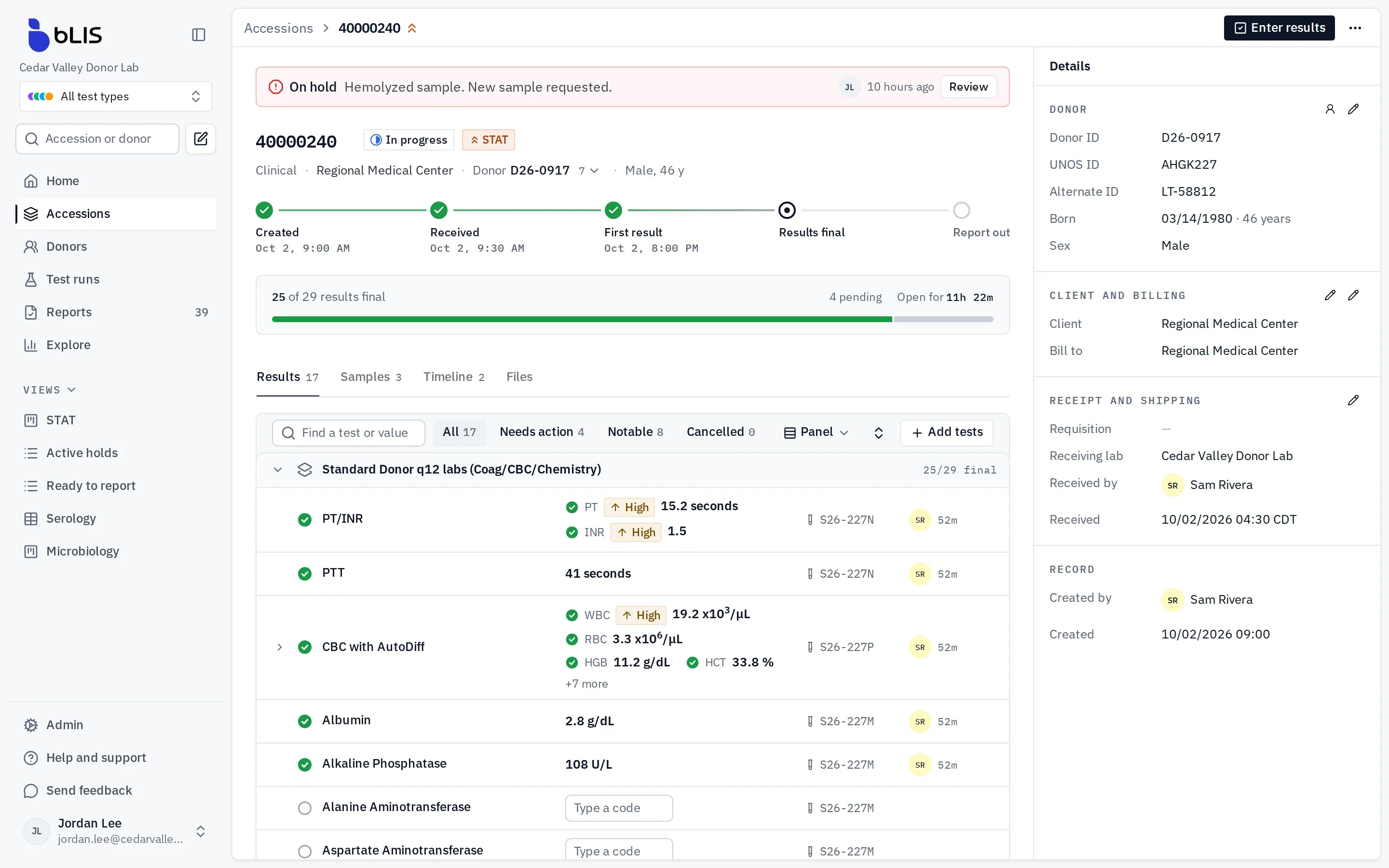
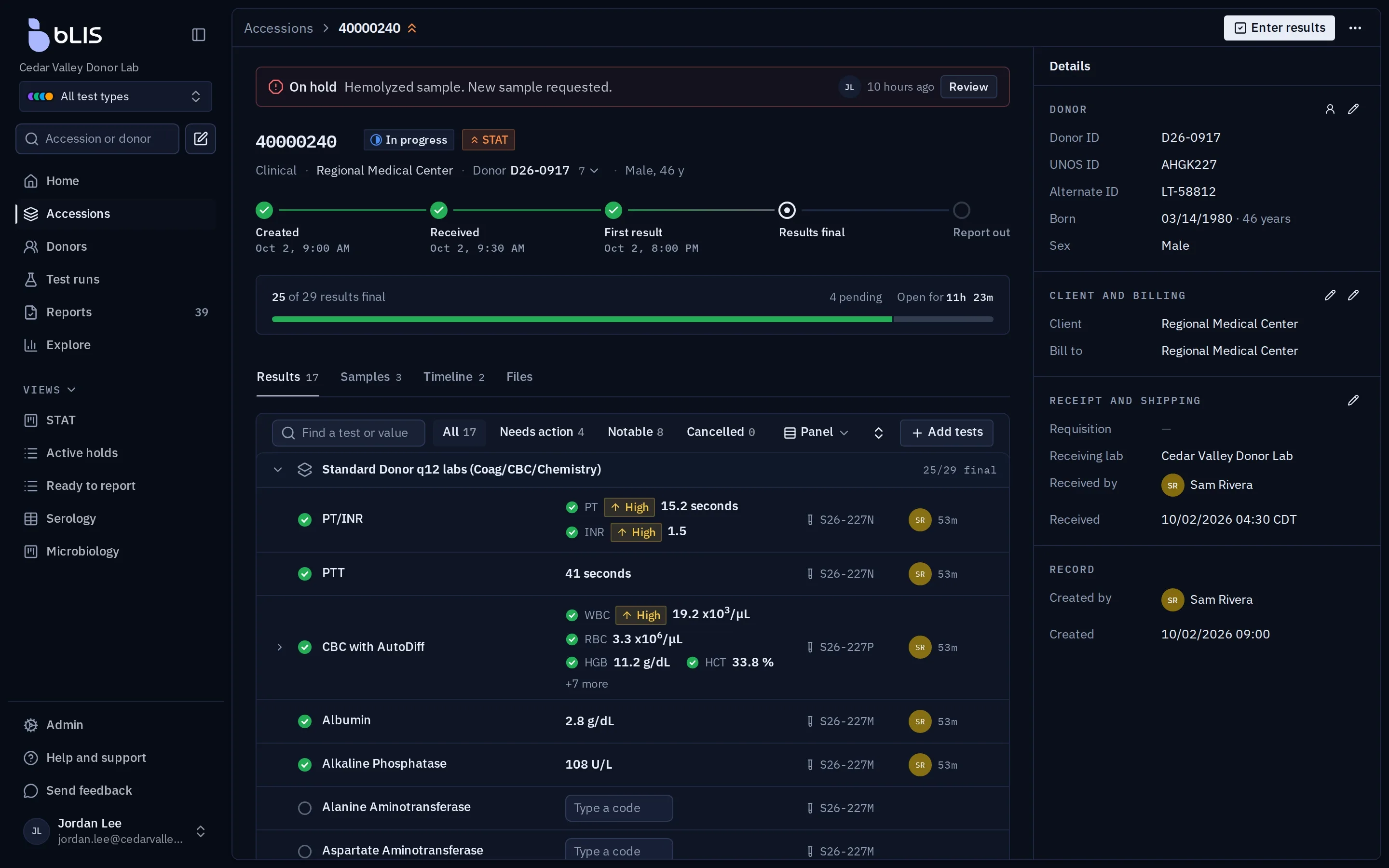
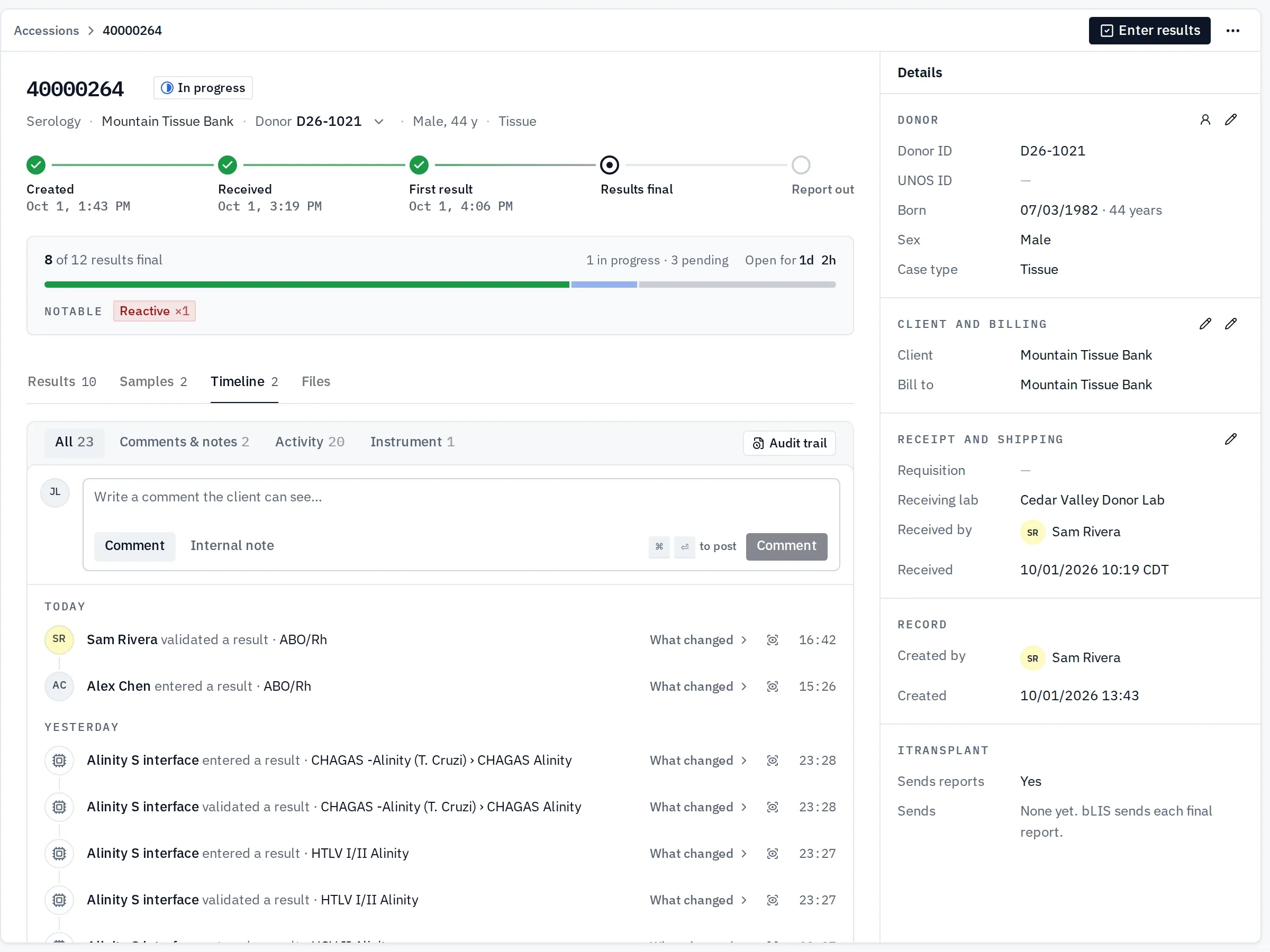
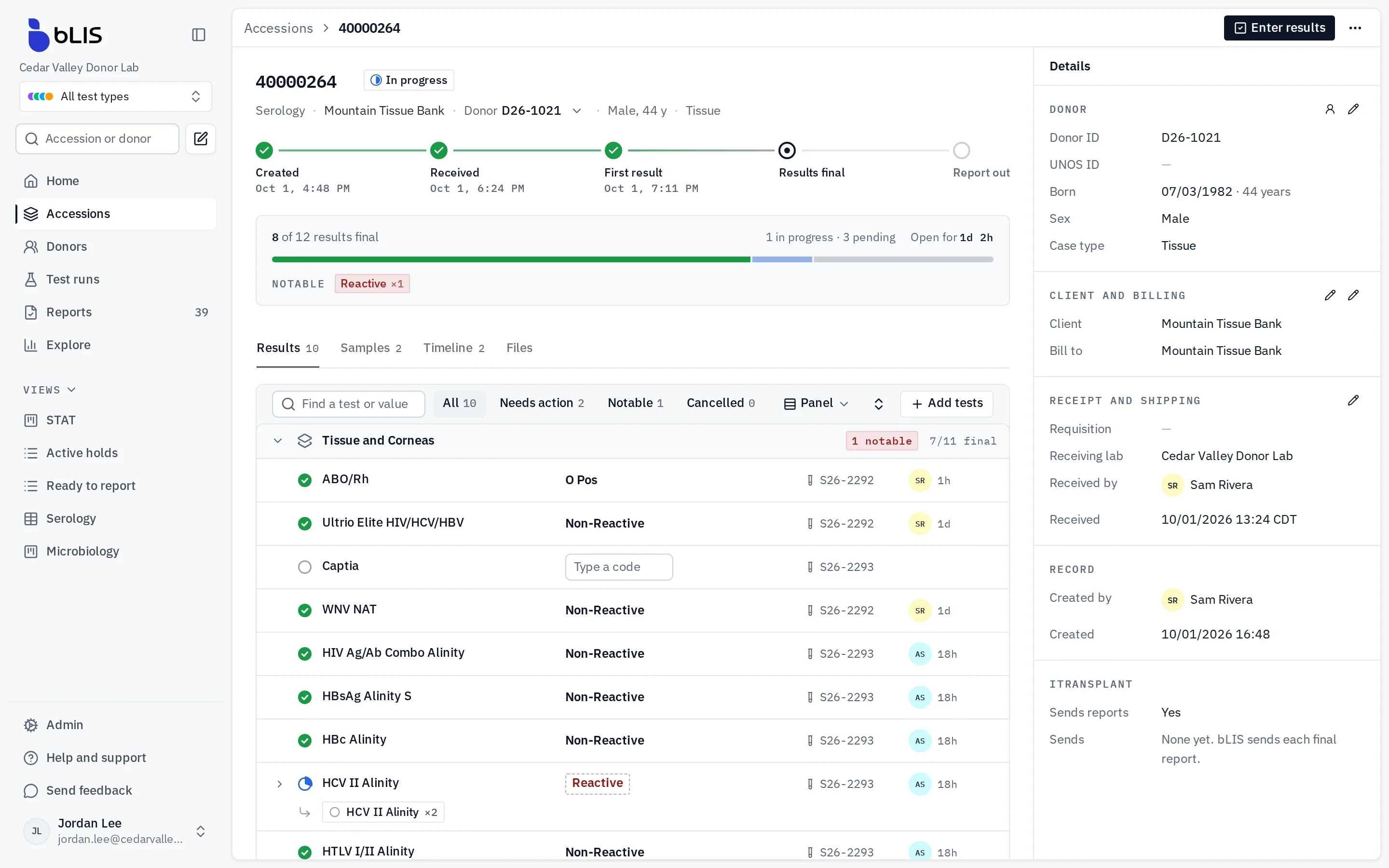
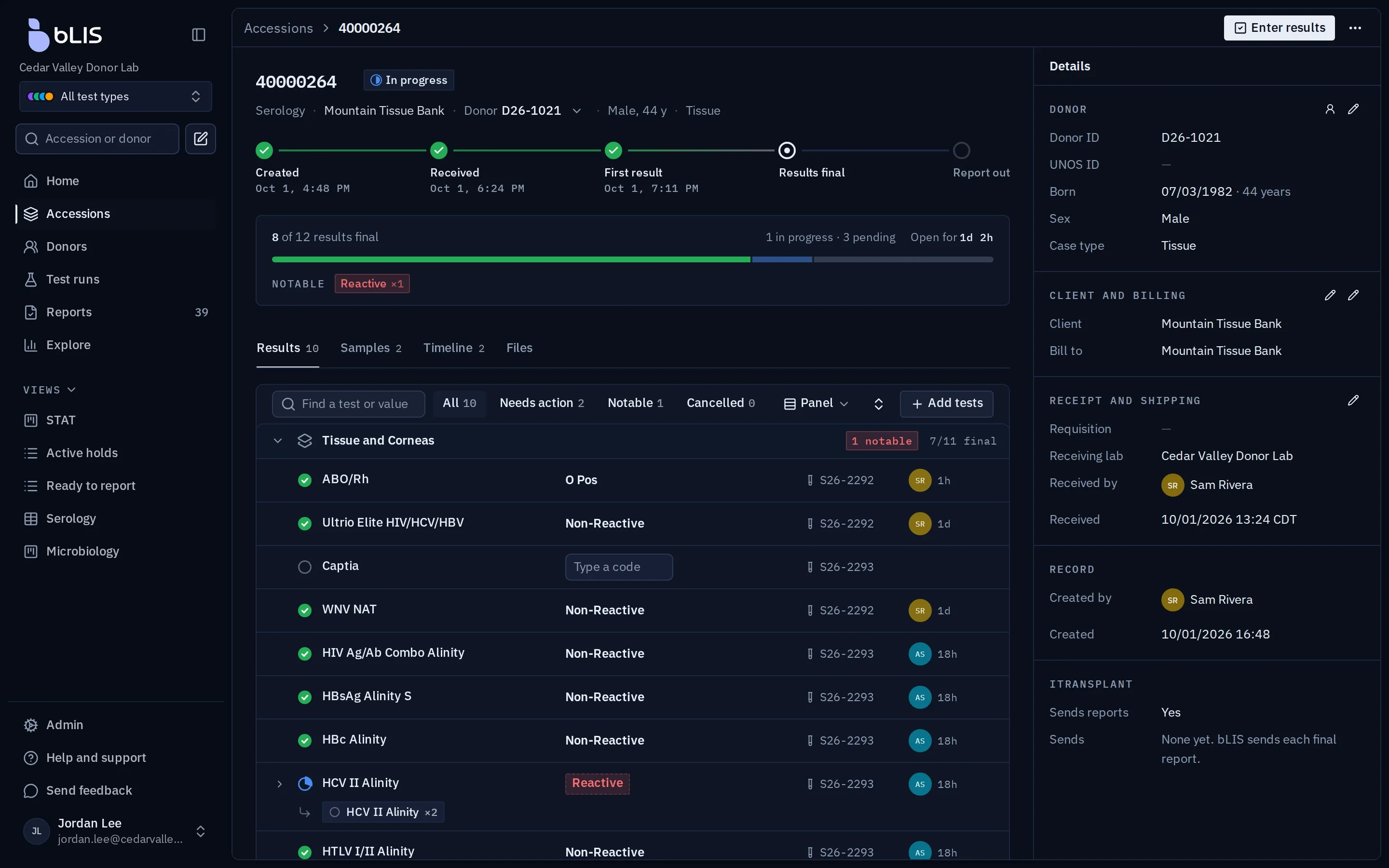
The bLIS accession page for a tissue donor's serology panel: its steps from created to report out, 8 of 12 results final, one reactive result marked notable, and the results list with a reflex repeat added under the reactive HCV screen.
  1. Every step in viewCreated, received, first result, results final, report out.
  2. Notable results stand outHere, one reactive HCV screen.
  3. Reflex testing on its ownThe reactive screen added its repeat, in duplicate.

Purpose-built for donor and transplant programs—and flexible enough for the multi-organization reference labs that serve them.

In production
Since 2020
Donors tested
40K+
Laboratory tests completed
850K+
Inspections passed with bLIS in place
  • FDA
  • CLIA
  • CAP
  • TGA
Operational thread

From request to report, without losing context.

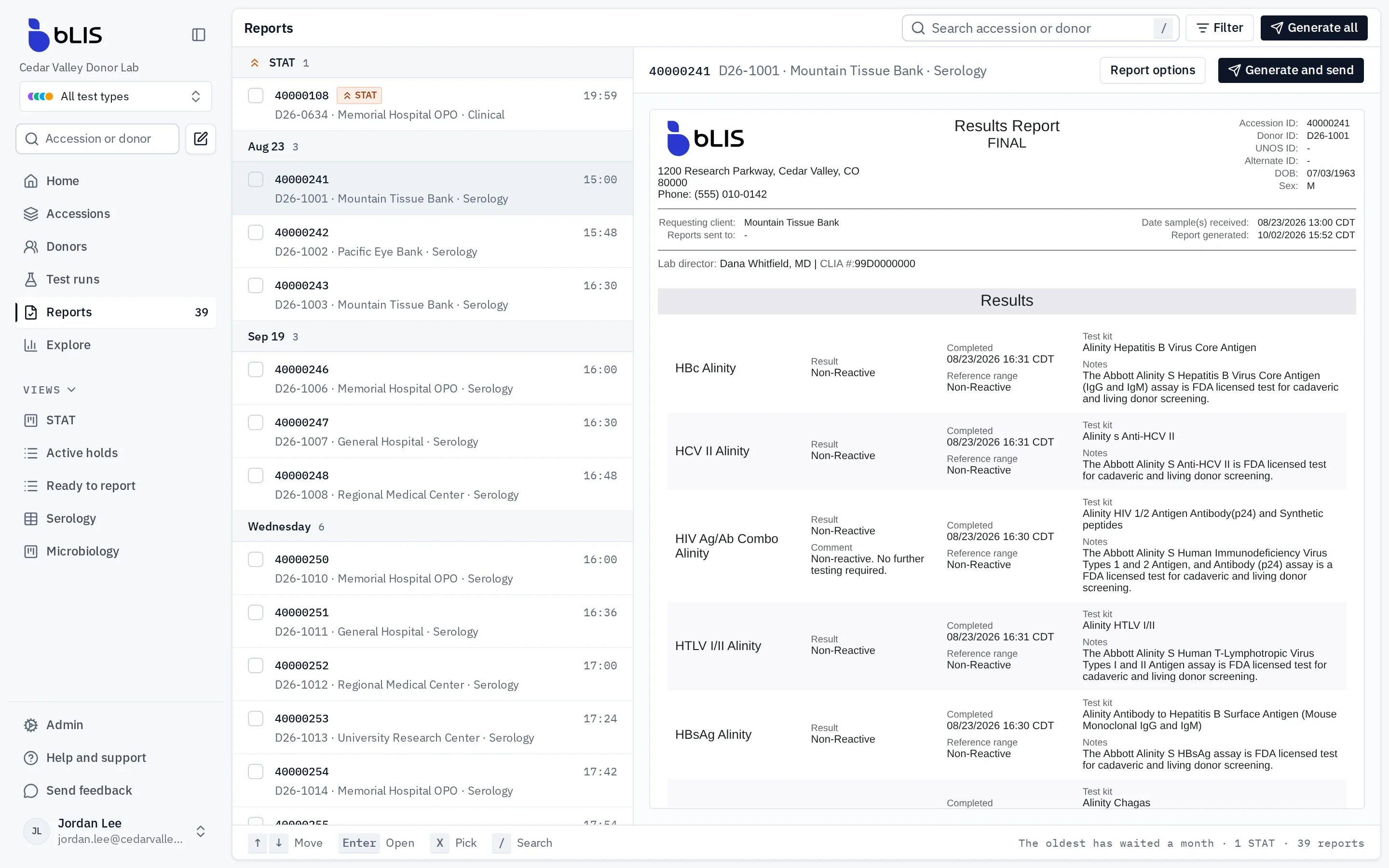
Each order connects the subject, samples, requested testing, result history, reports, and billing across the organizations involved.
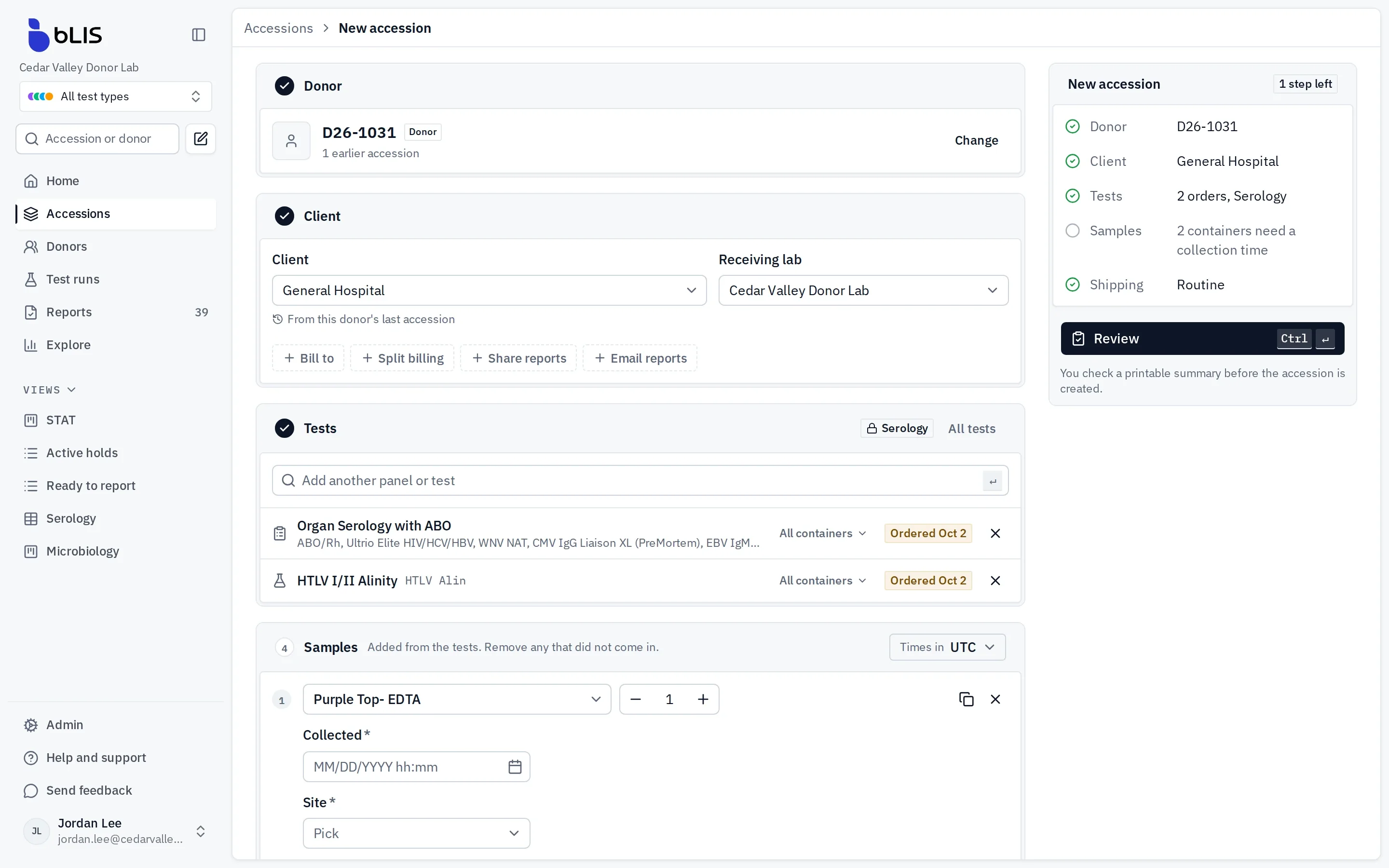
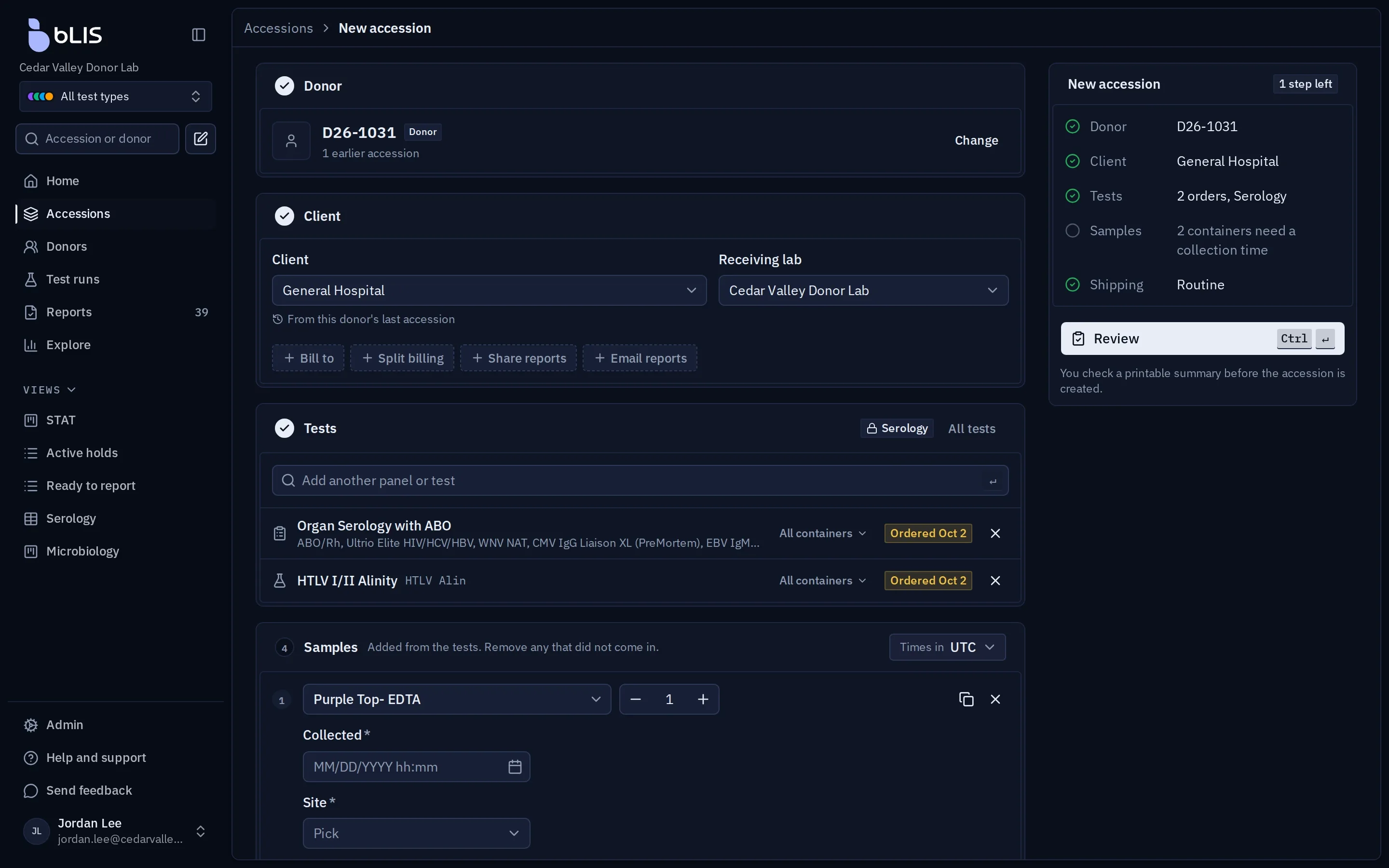
The bLIS new accession page with the donor, the client and receiving lab, two ordered tests, the samples they need, and a summary with one step left.

Intake. Capture the request, subject, organizations, samples, and instructions together.

Fig. 1A new accession on one page: the donor, the client, and the tests, copied from the donor's last accession. The samples come from the tests, and the summary shows the one step left.

Result lifecycle

A result is more than a value.

bLIS records how each result moves through entry, validation, and finalization. Manual and instrument results follow the same configured path before they appear on a report.
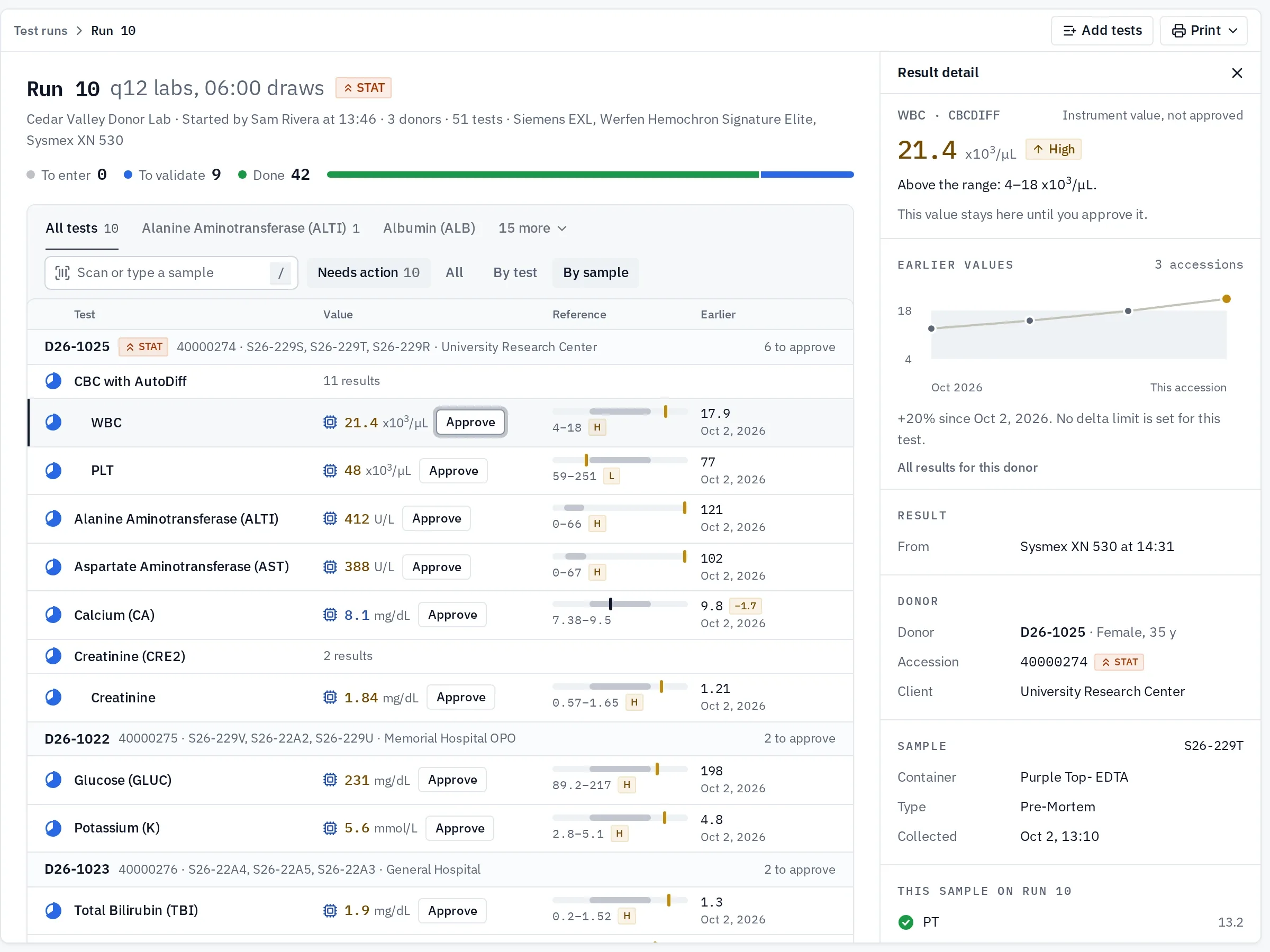
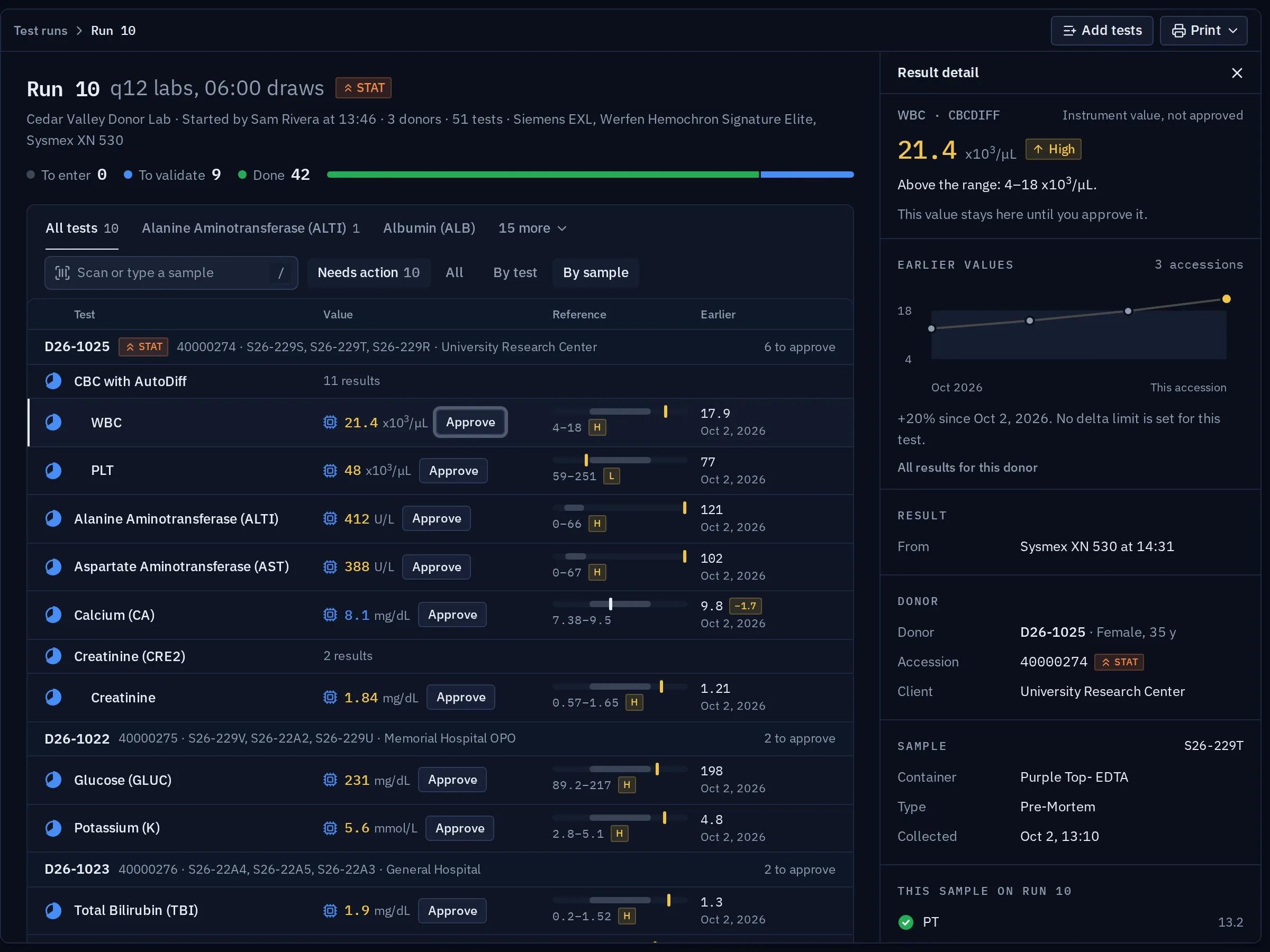
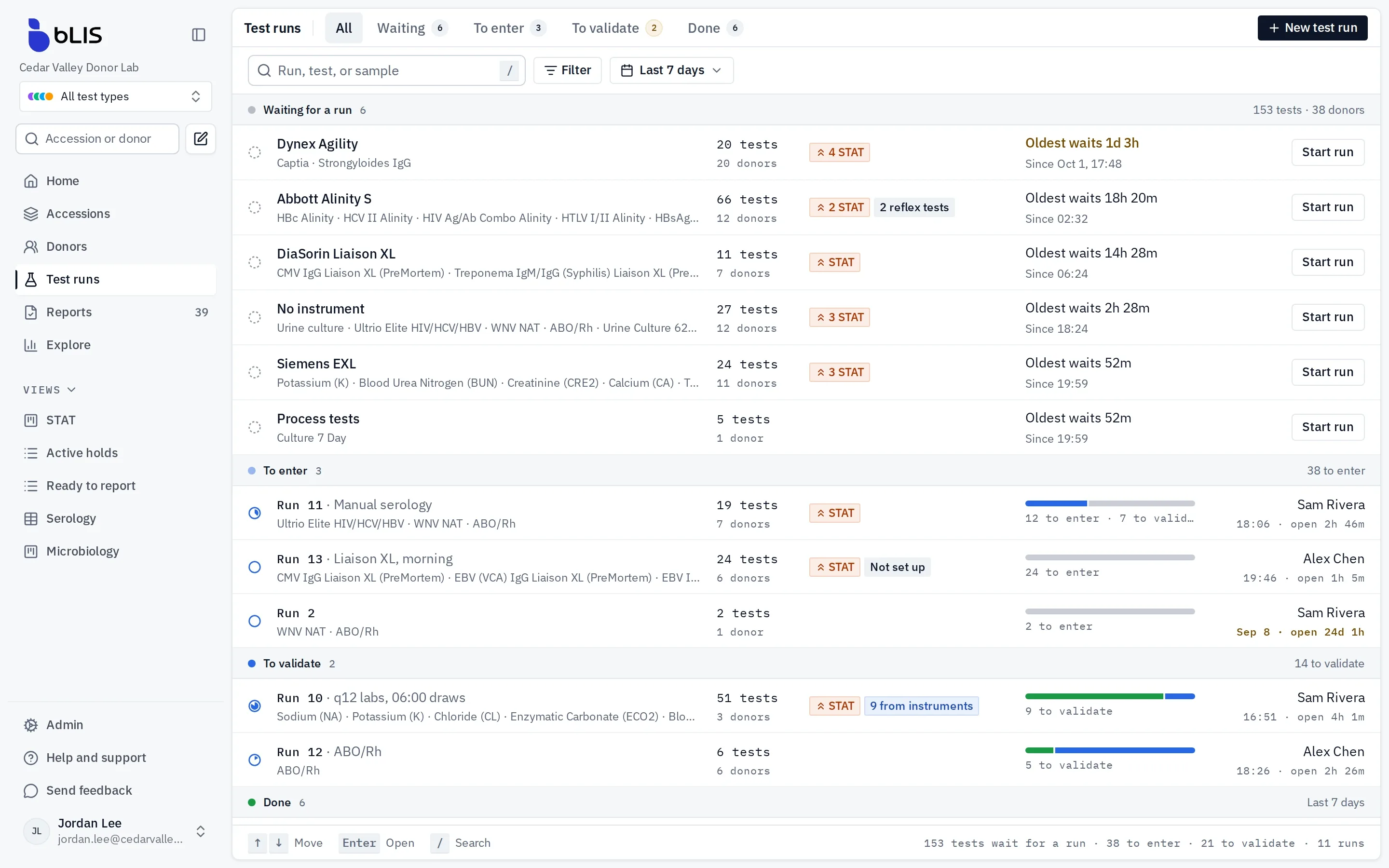
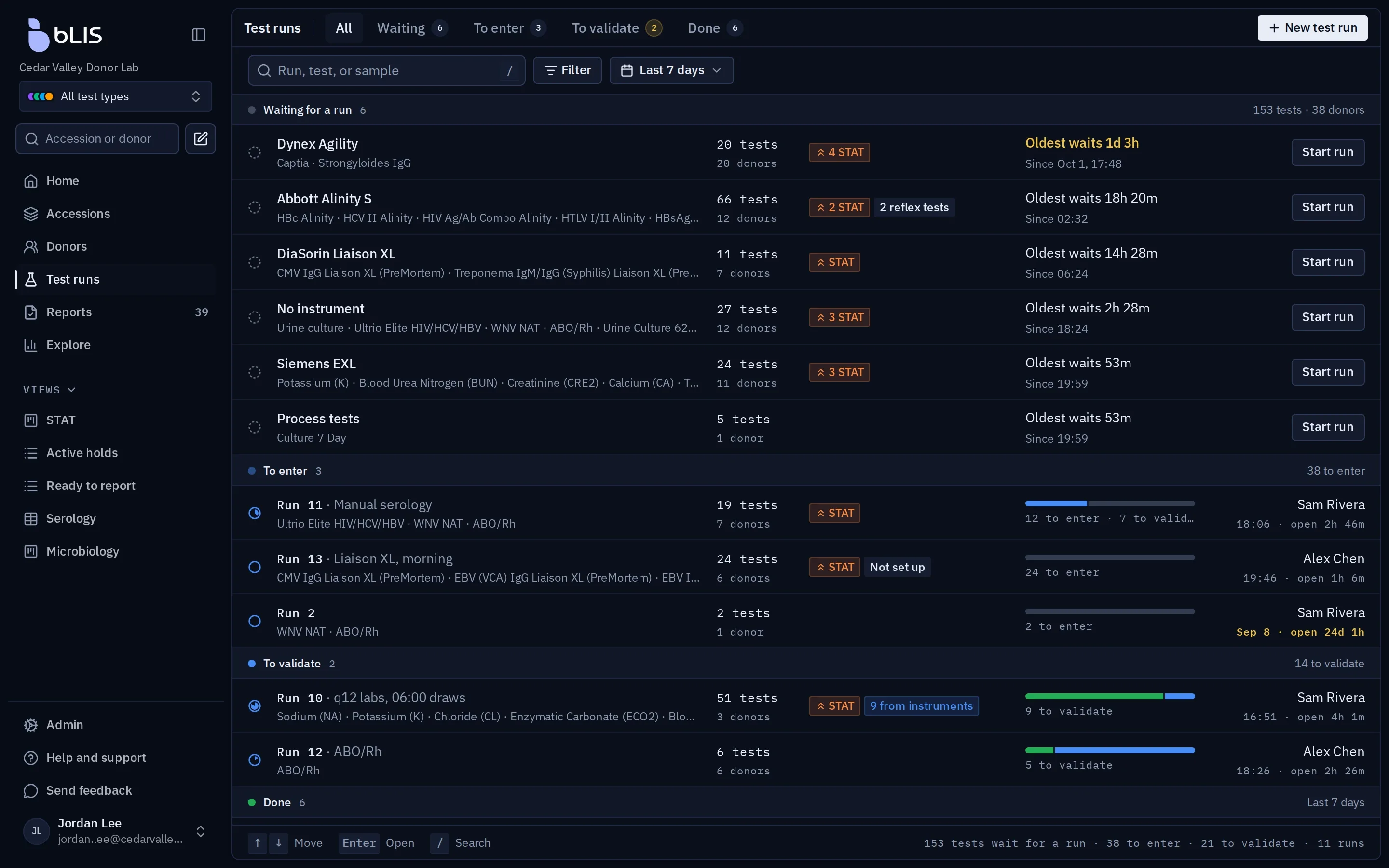
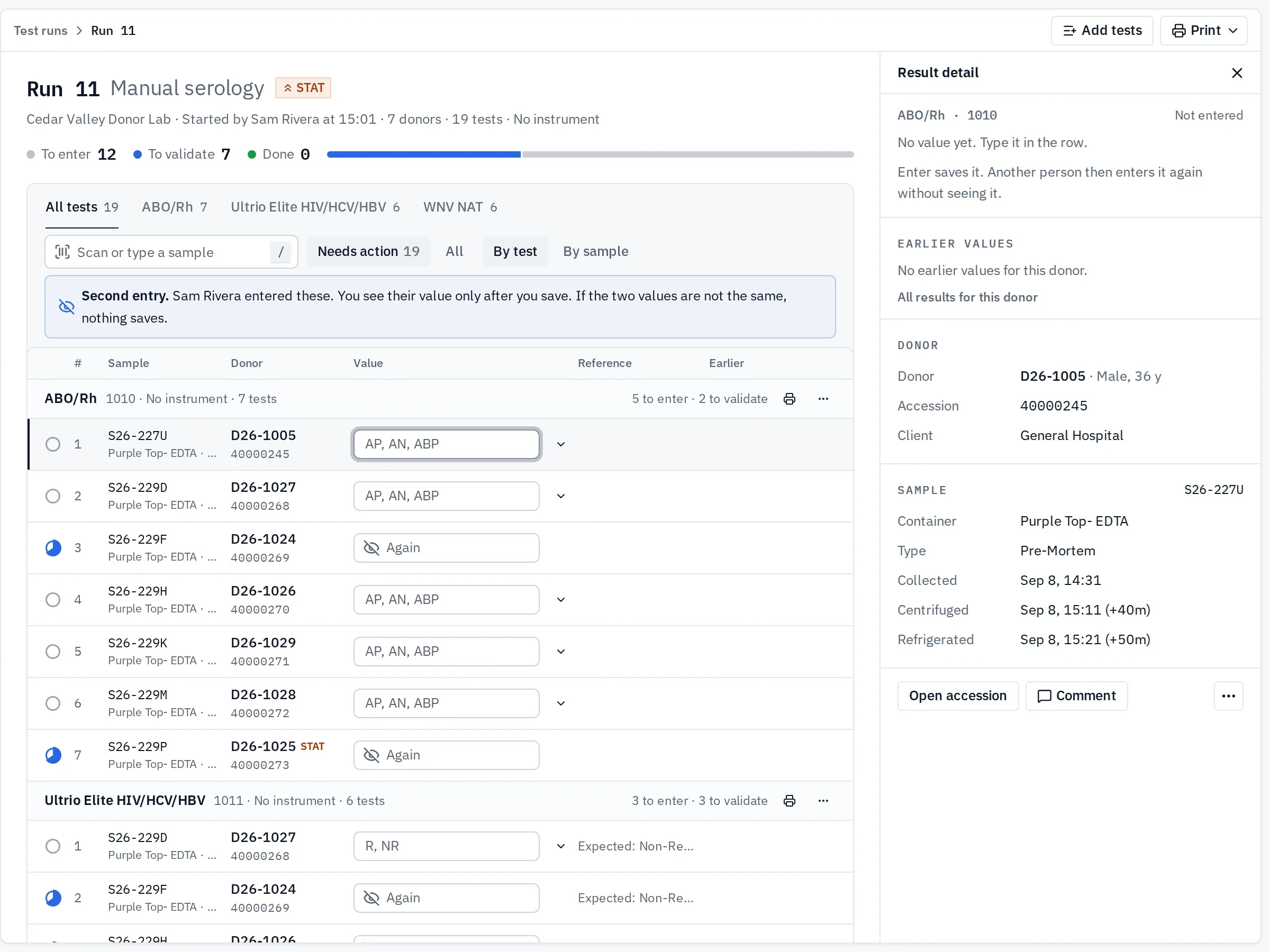
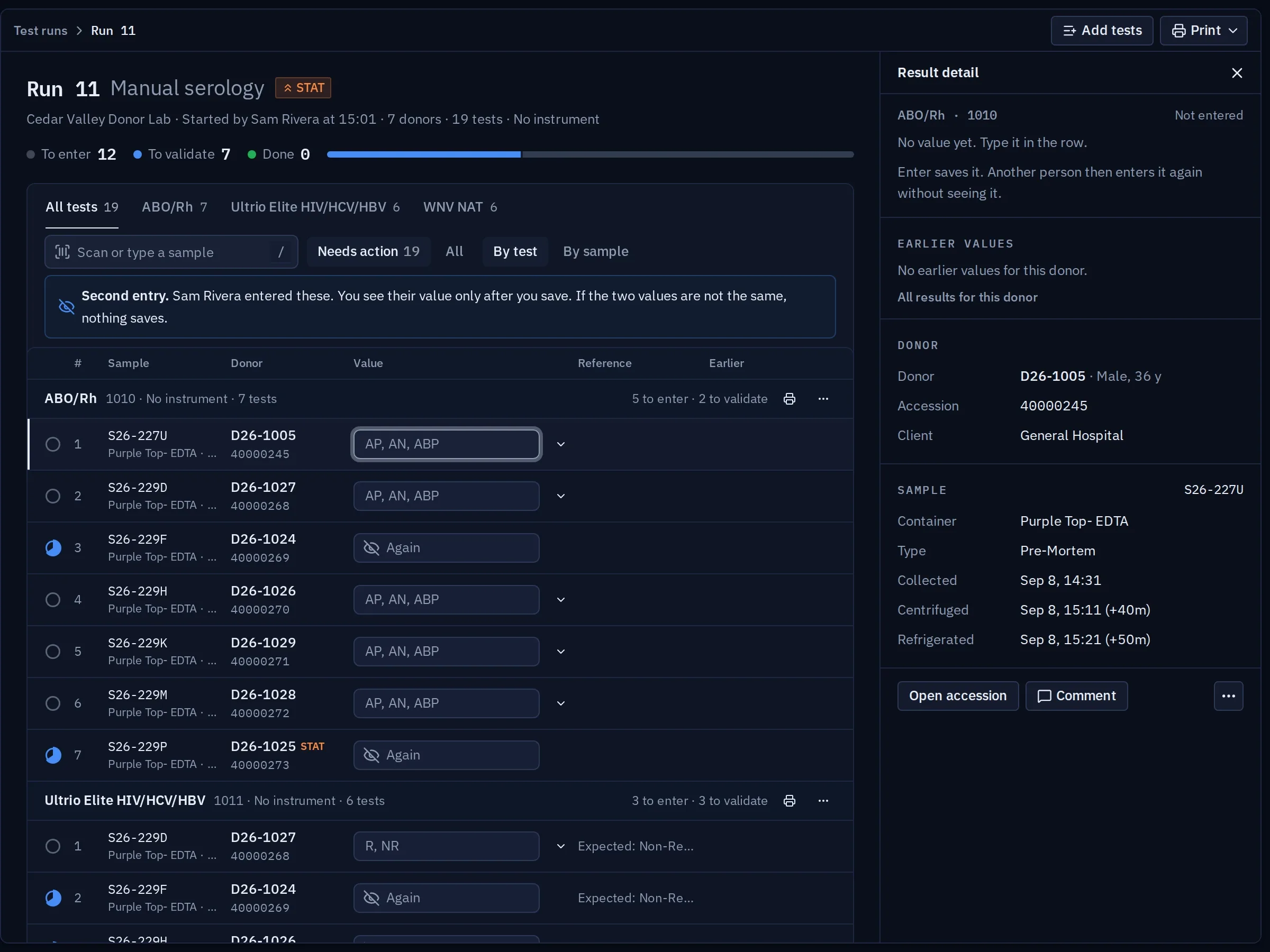
A bLIS test run with instrument results waiting for approval, each with its reference range and earlier values, and the detail of one high white cell count.
Run 10: results from three instruments, each with its reference range and the donor's earlier values. A value stays unapproved until a person approves it.
Platform

Built for the whole operation.

Beyond entering and reporting results, bLIS automates the testing your donors require, controls release, bills across organizations, and gives every client their own way in.

Reflex & confirmatory testing

Configure dependent reflex results that resolve a parent, or follow-up tests that report on their own—triggered automatically as results land.

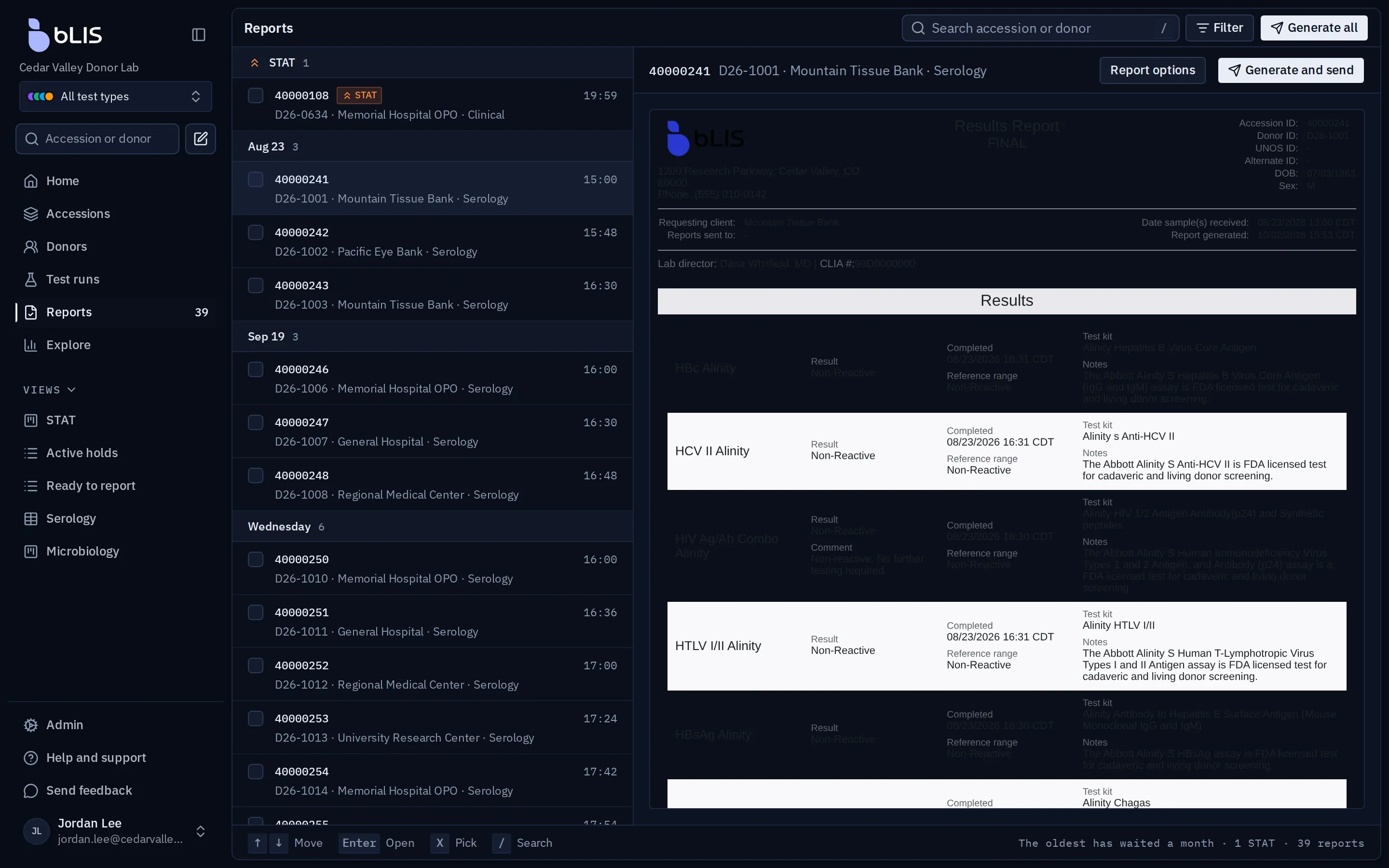
A serology panel in bLIS: non-reactive results, one reactive HCV screen, and its reflex repeat in duplicate added under it.

Holds & release gates

Block final-report release until a specimen, clinical, technical, or administrative issue is resolved and signed off.
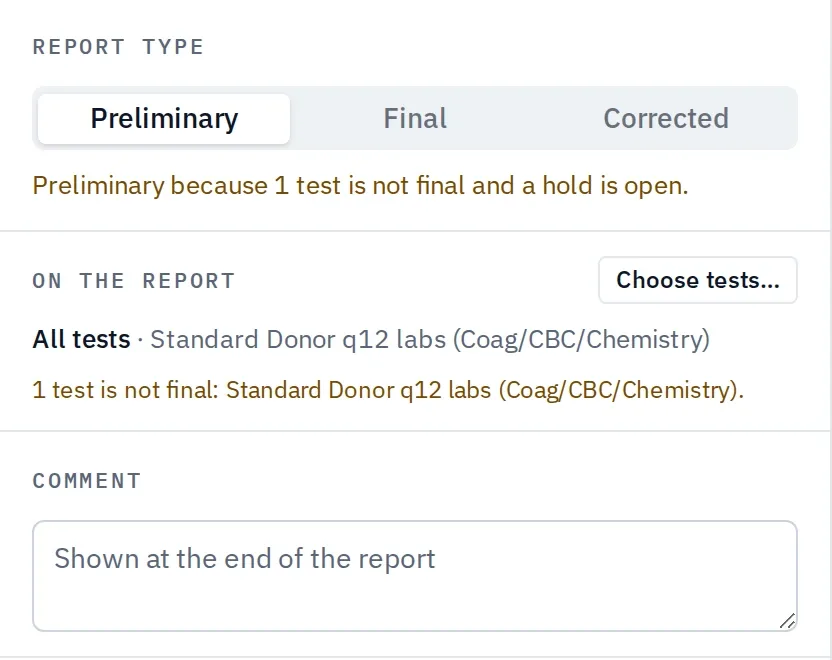
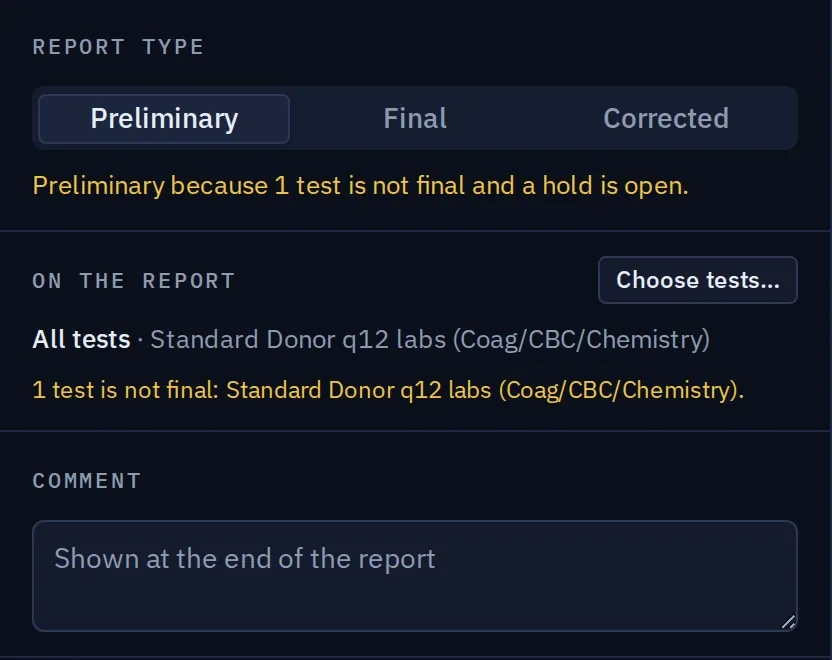
The bLIS report panel: the report can only be preliminary because one test is not final and a hold is open.

Client portal

Give client organizations scoped sign-in to submit testing, track status, and retrieve finalized reports.
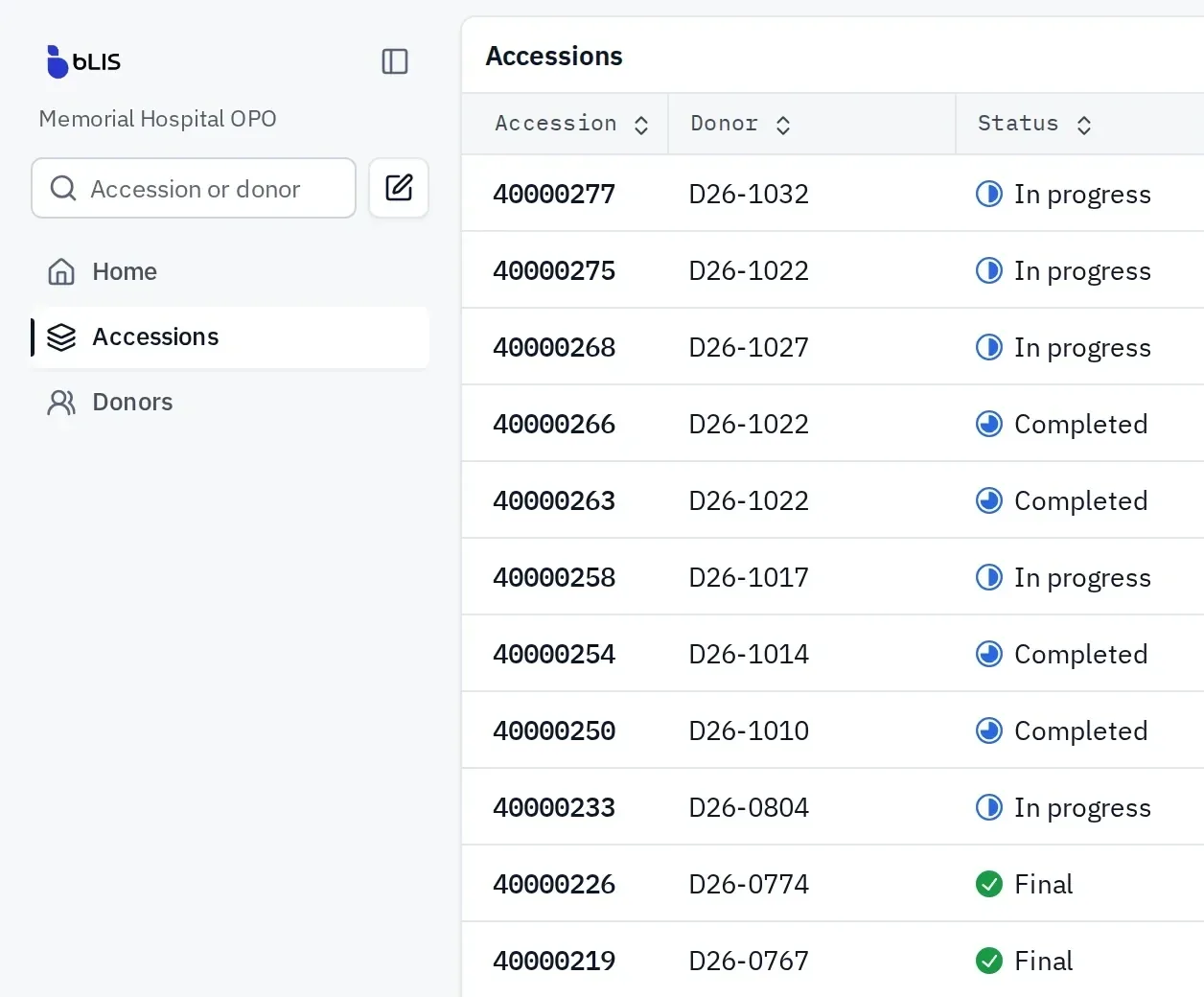
bLIS signed in as a client organization: its own accessions only, each with its status.

Multi-organization billing

Split billing across organizations, run billing on a schedule, and issue consolidated master invoices as PDF or Excel.
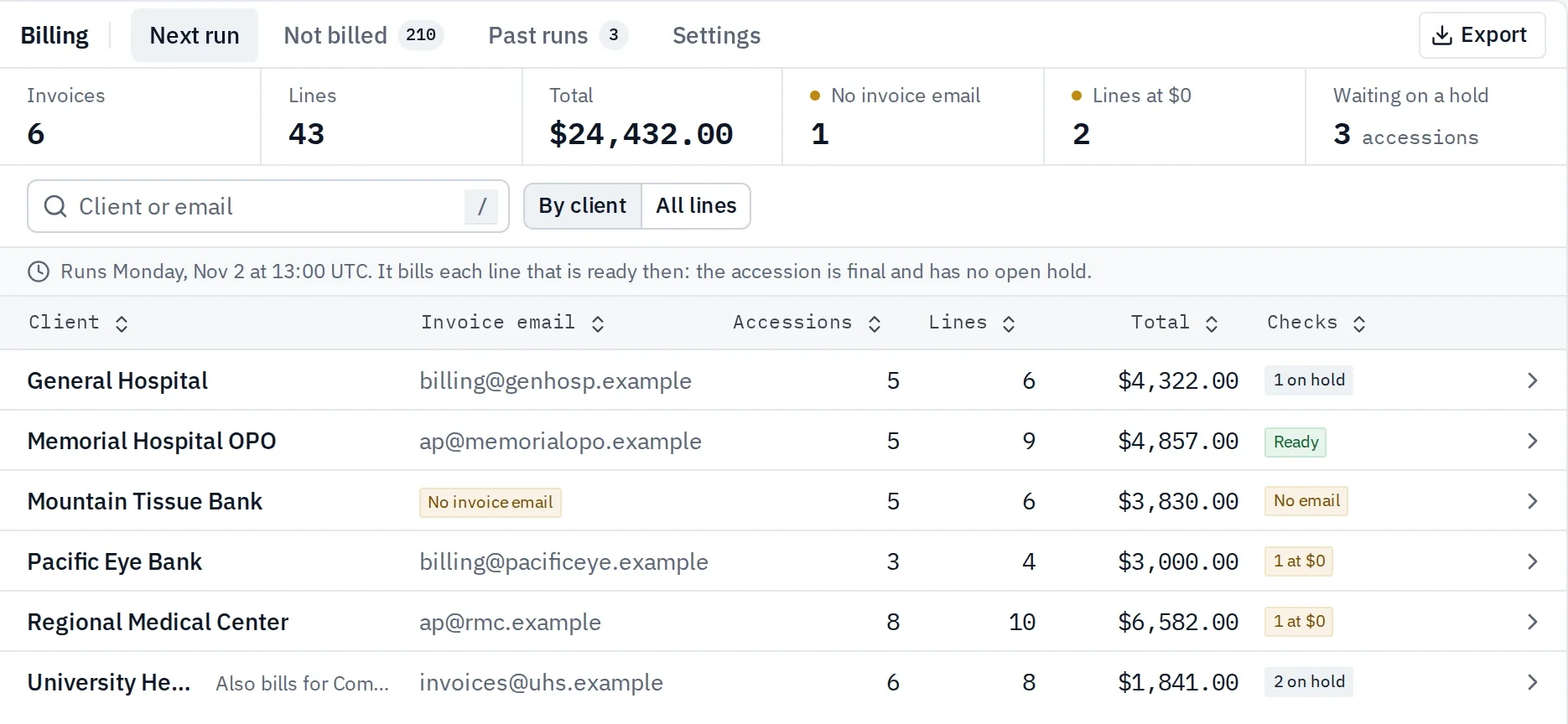
The next billing run in bLIS: invoices by client, with totals and checks such as a missing invoice email or a line on hold.

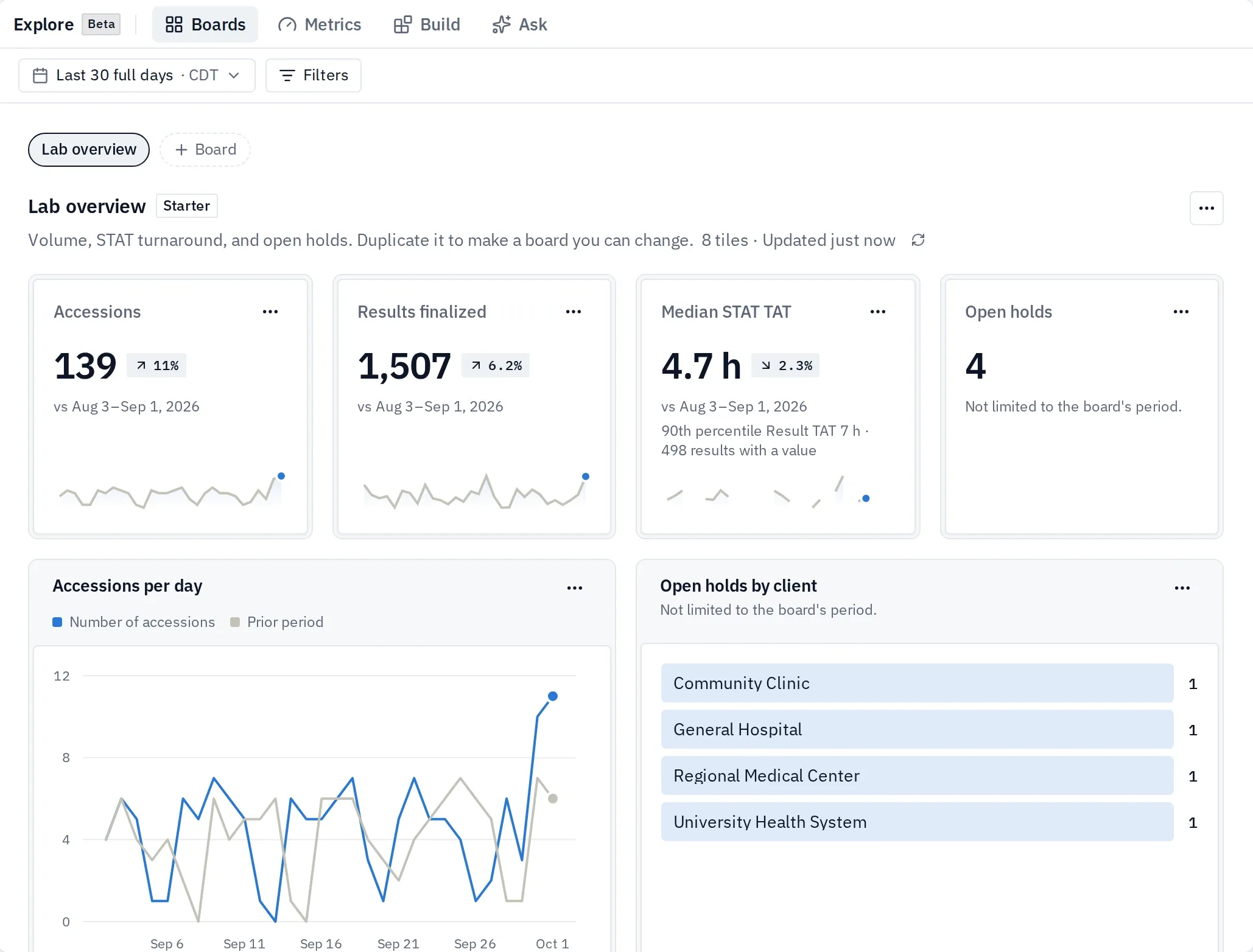
bLIS Insights

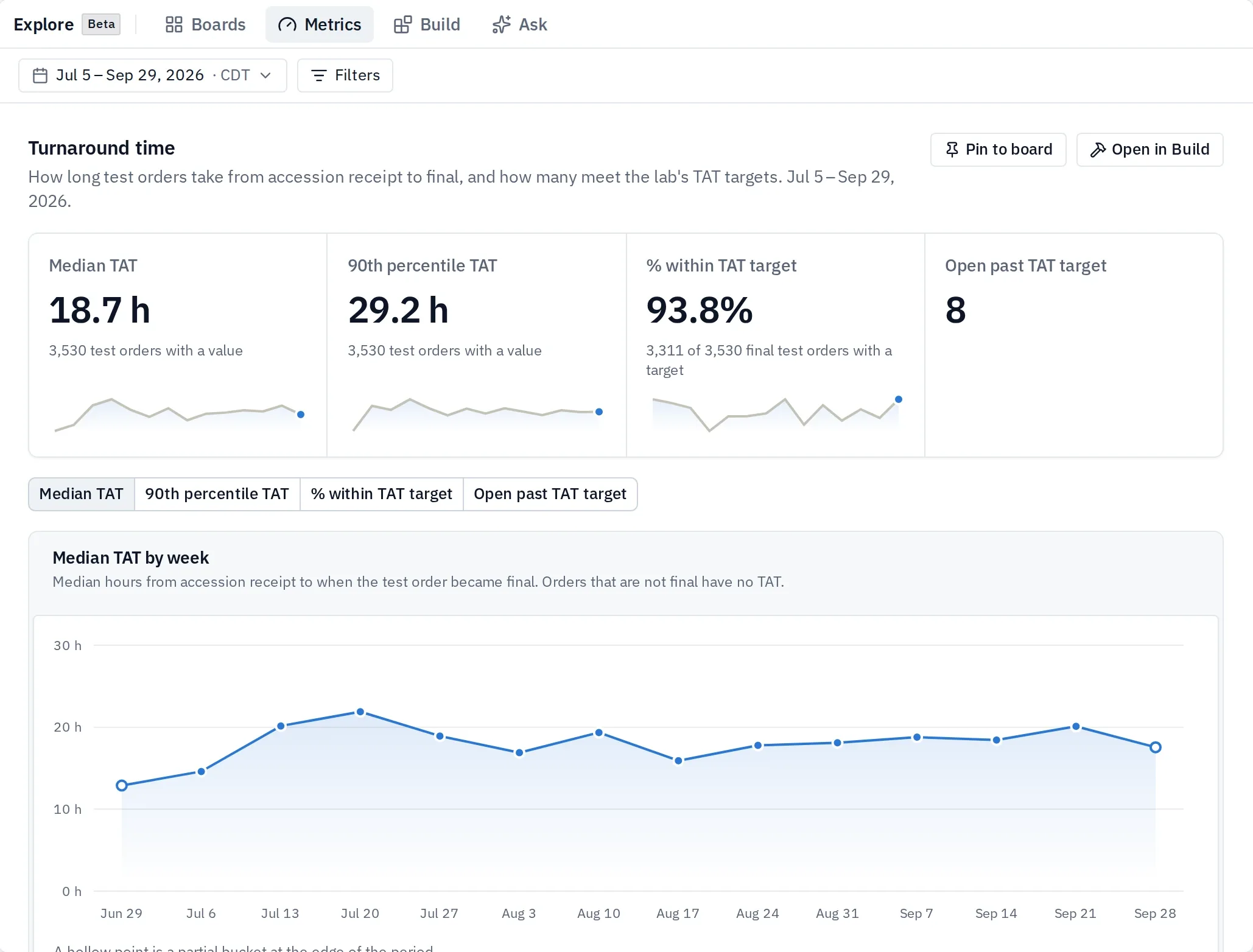
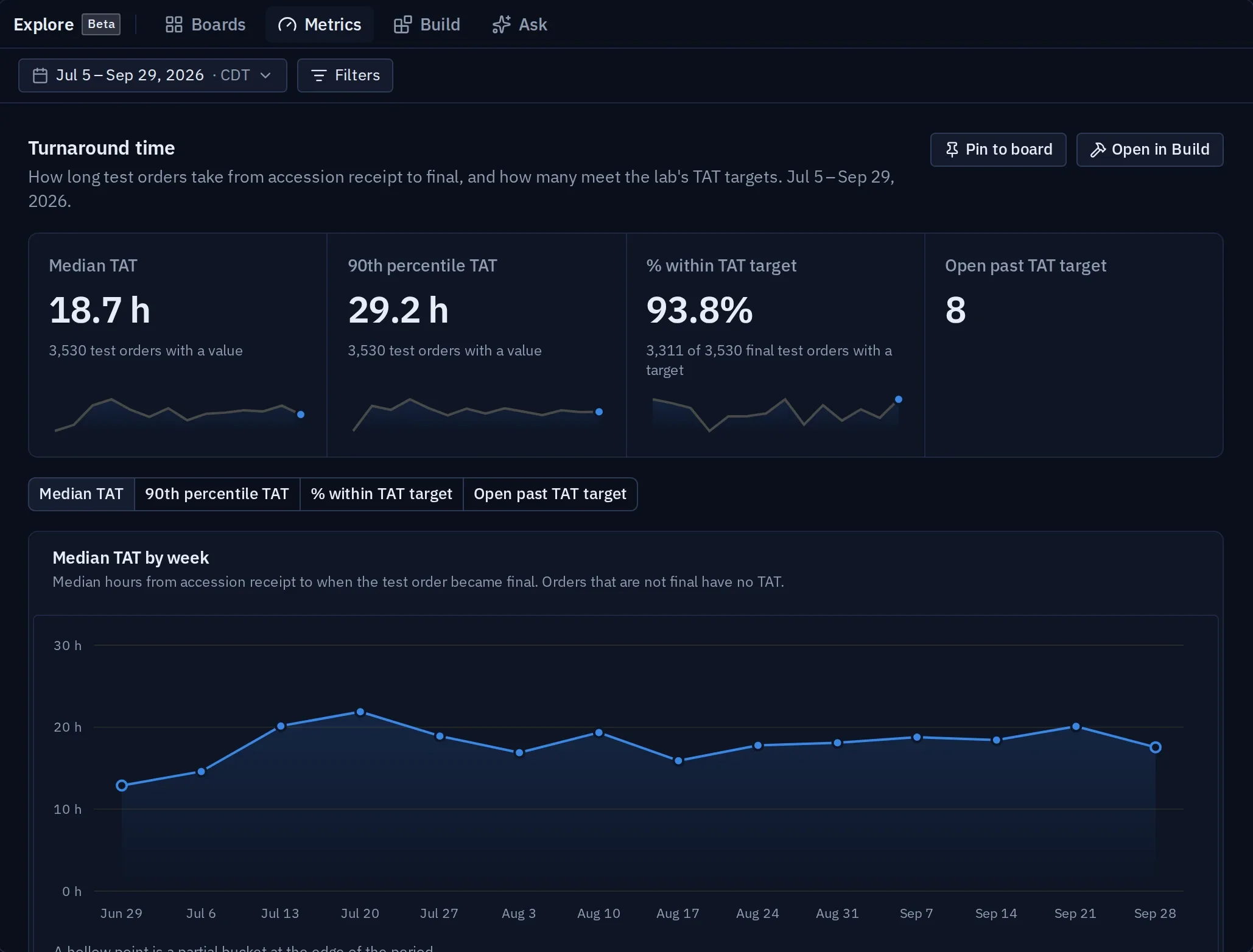
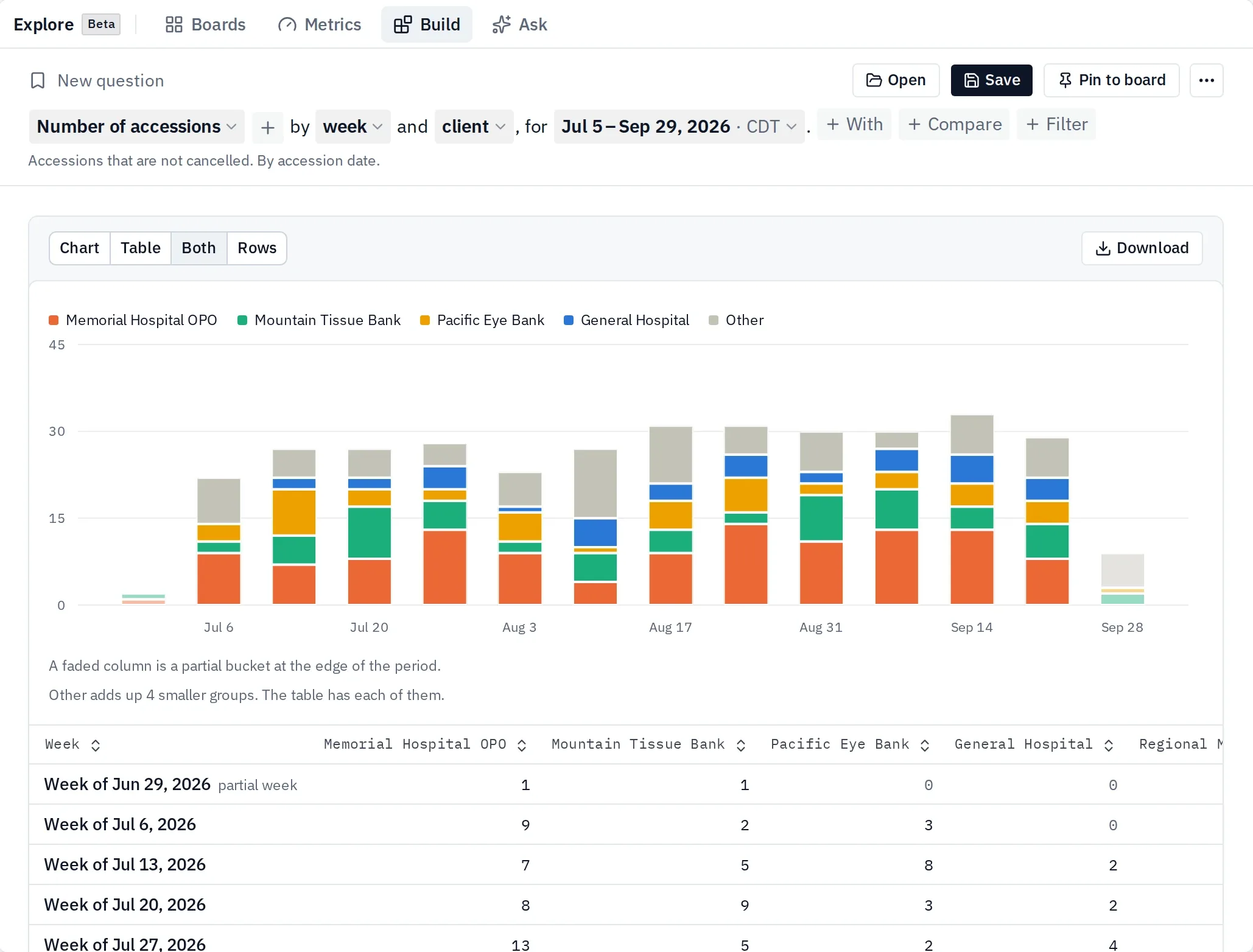
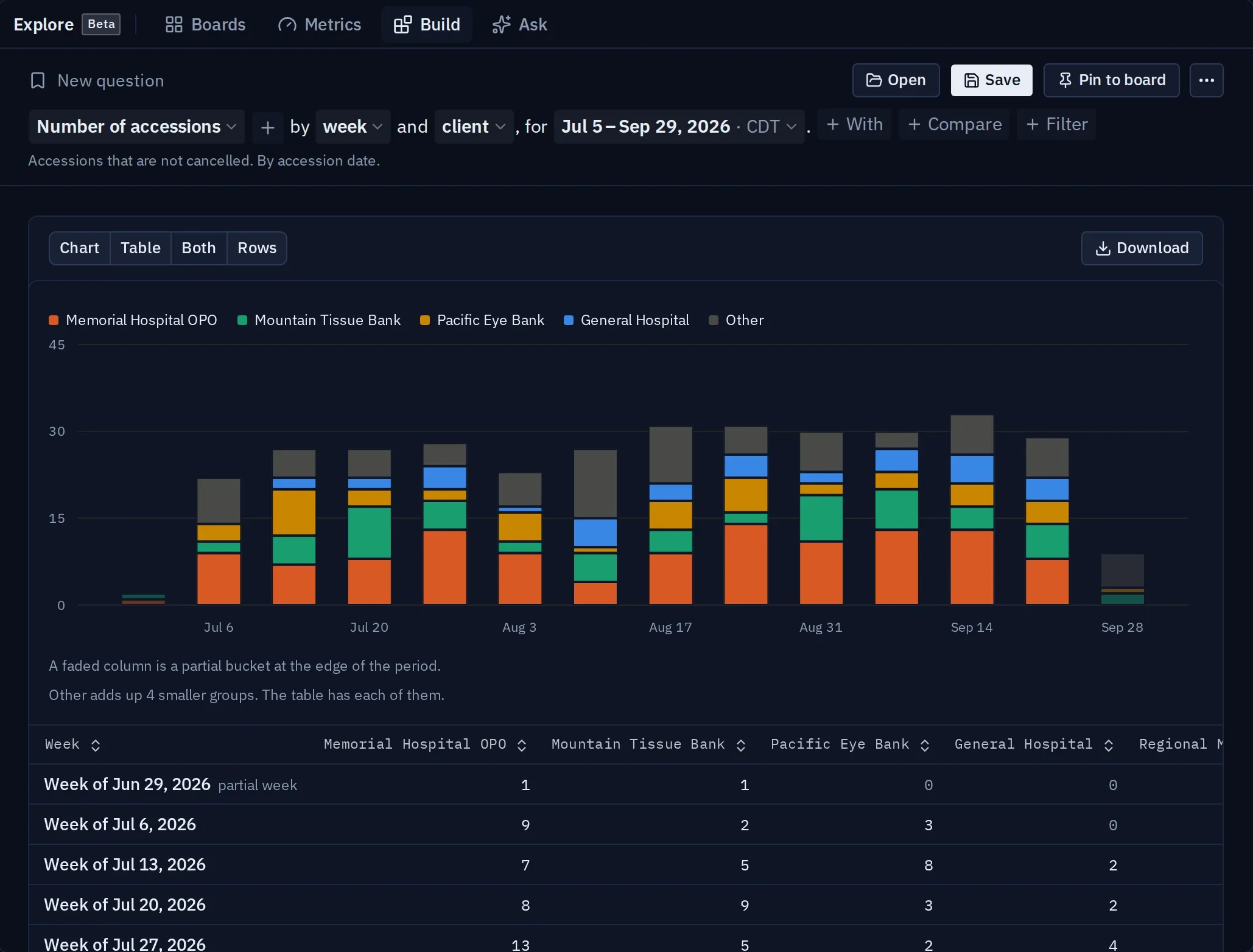
Dashboards and reporting across orders, turnaround, and throughput—built on your live laboratory data.

bLIS Insights metrics: reactive rate, turnaround time, sample quality, and billing.

Configurable testing

Define your tests, panels, result specs, and validation rules—including independent double entry where you require it.
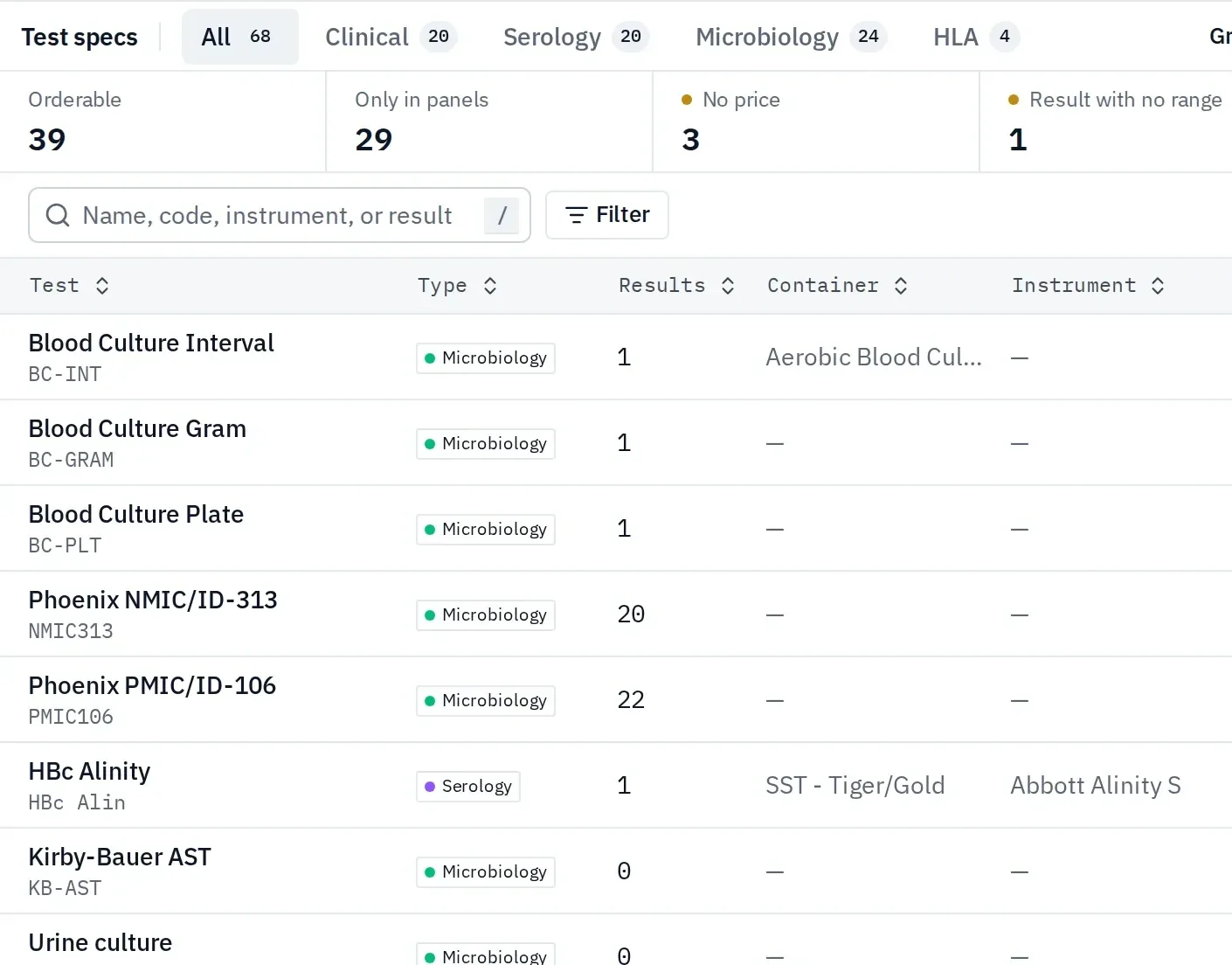
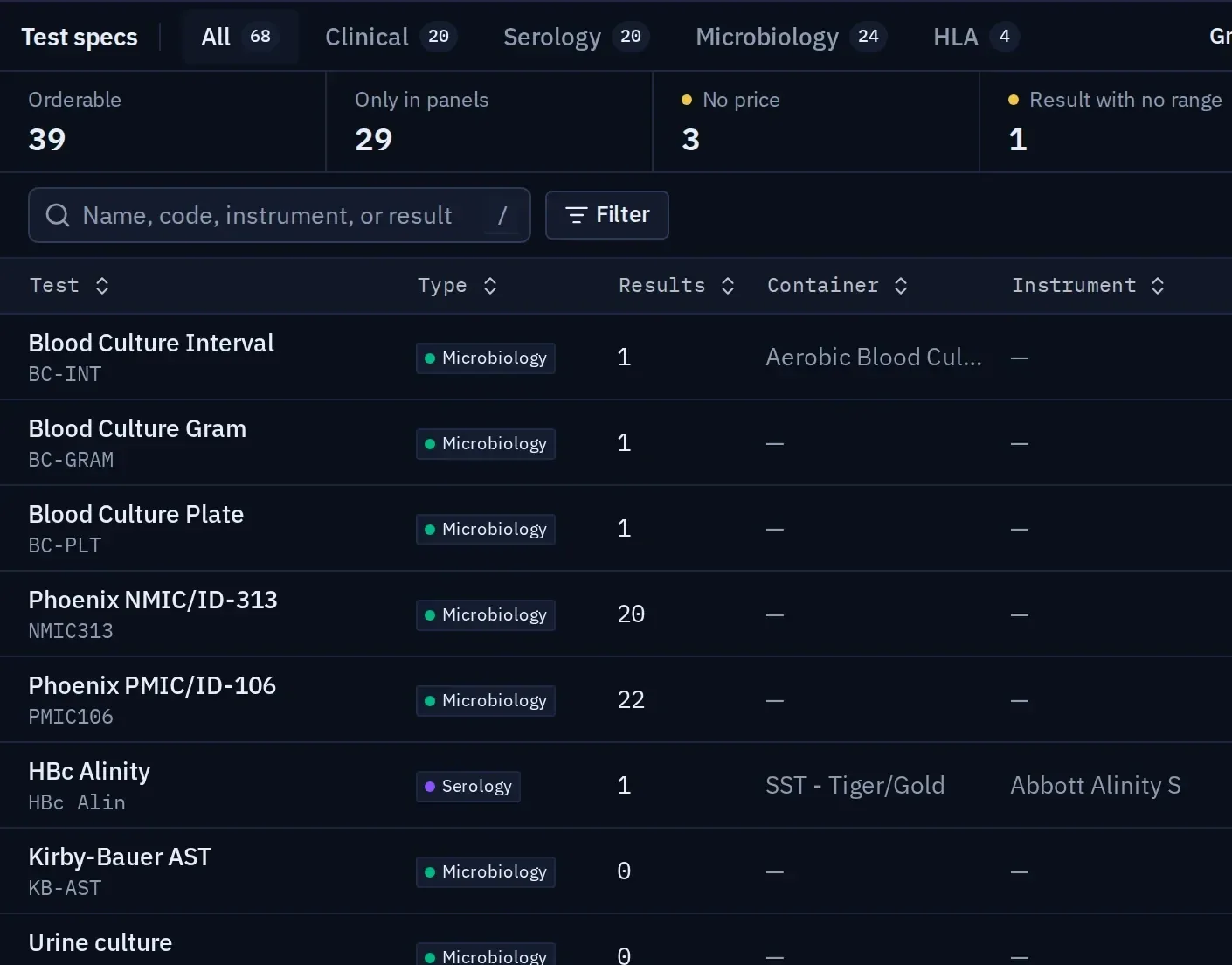
The bLIS test specs list, grouped by clinical, serology, microbiology, and HLA, with checks for tests that have no price or no range.
Connected operations

Connect instruments without rebuilding the lab around them.

bLIS Gateway runs on the laboratory network, translates instrument protocols, and moves orders and results between analyzers and bLIS.

Instruments on the laboratory network connect to bLIS Gateway, which runs inside that network. The gateway sends orders and results to and from bLIS.
  • AnalyzerASTM E1394
  • AnalyzerHL7
  • InstrumentCustom protocol
bLIS GatewayInside your network
Laboratory information system
Traceability and access

Know what changed, who changed it, and when.

bLIS maintains application-action and data-change histories, while roles, SSO, and client assignments control access.

  • Role-based access

    Roles separate client access, read-only use, laboratory work, and administration.

  • Client-scoped visibility

    Primary and additional client assignments control which orders and billing data a user can access.

  • Single Sign-On

    SAML and OpenID Connect can map identity-provider attributes to bLIS roles and clients.

  • Action and audit history

    Review application activity and the before-and-after data for database changes.

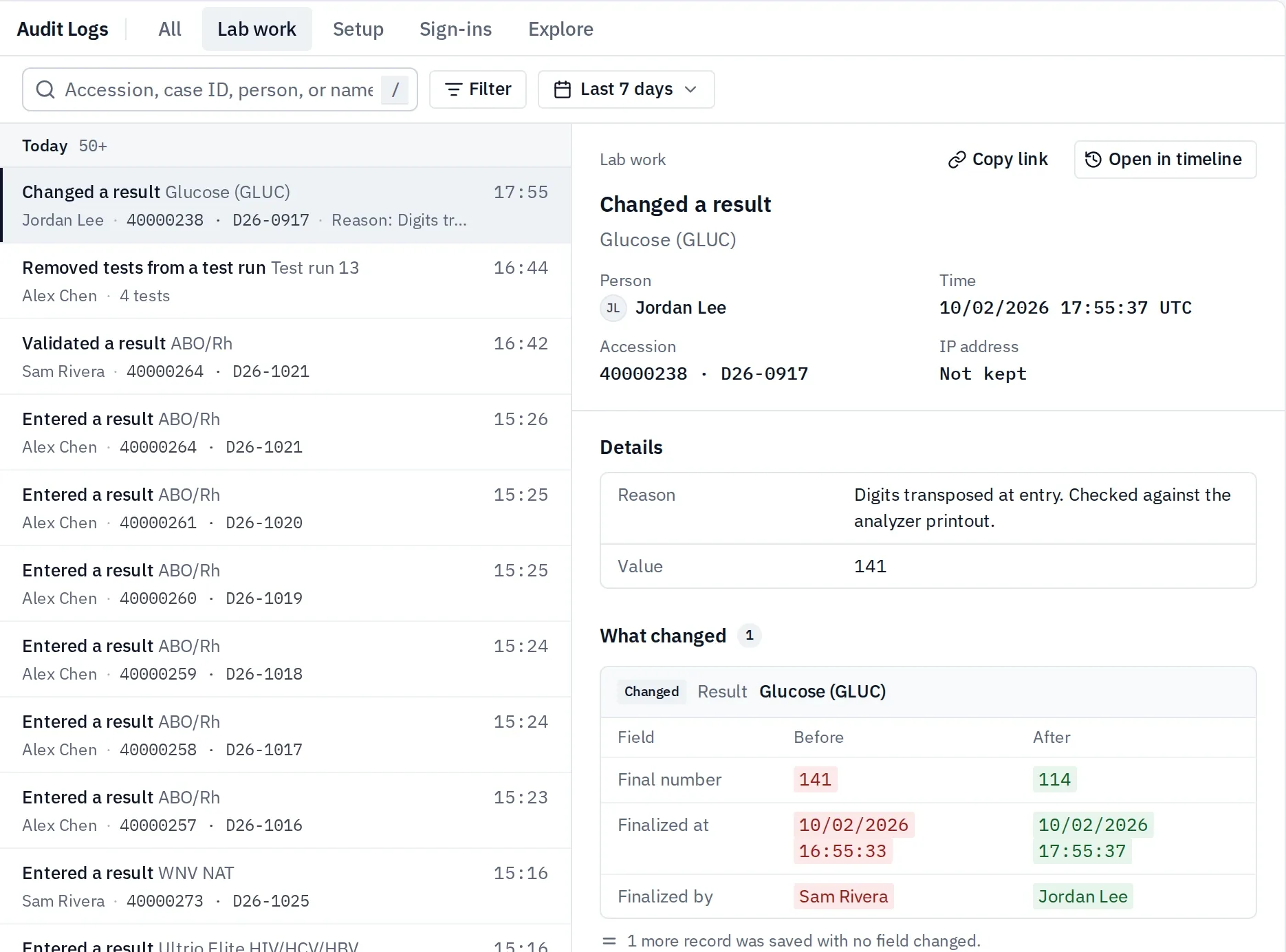
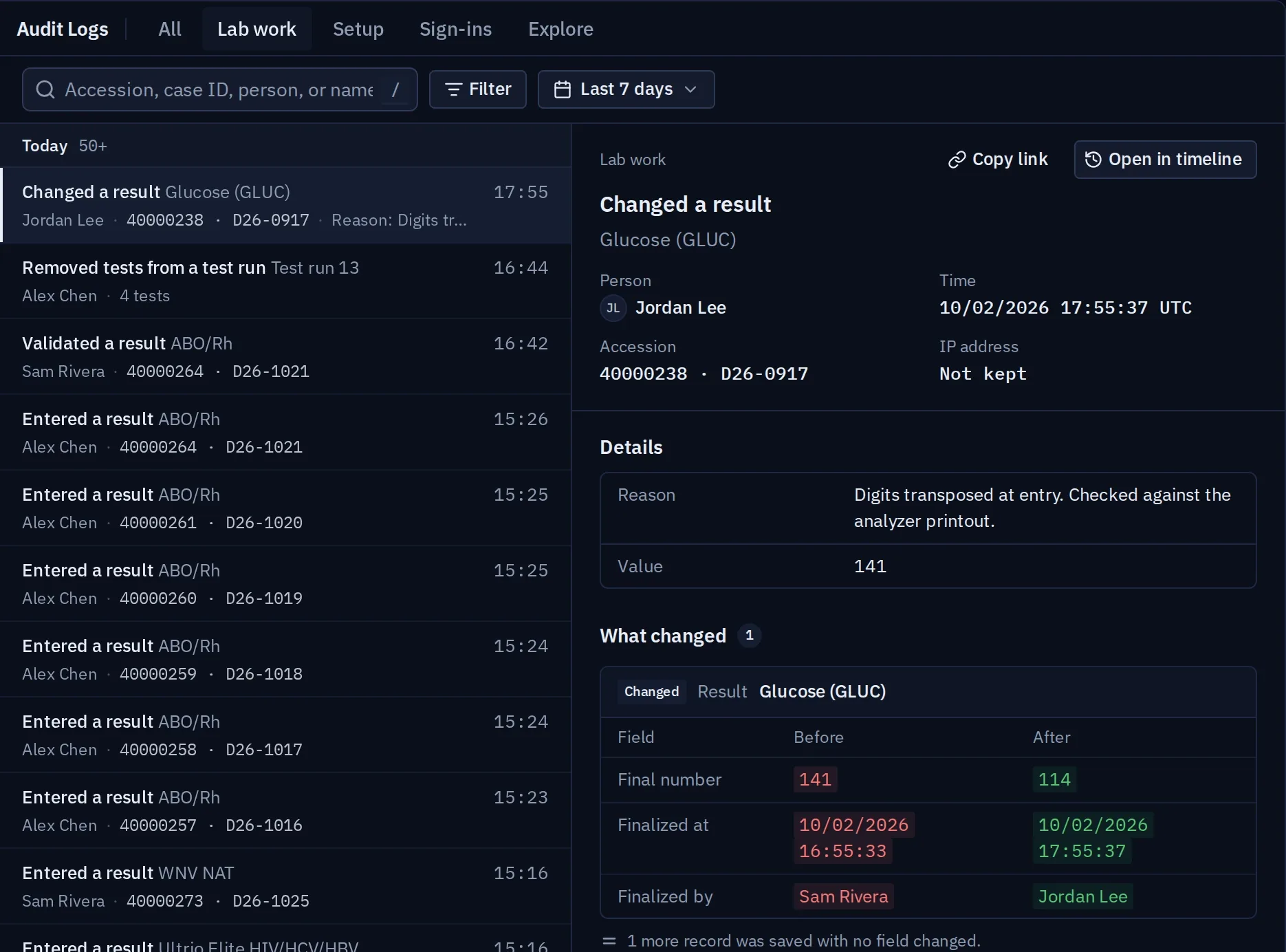
A bLIS audit log entry: a lab manager changed a glucose result from 141 to 114 with the reason, digits transposed at entry, and the log shows the time, the accession, and each field before and after.
A corrected result in the audit log: who changed it, when, the reason, and each field before and after.
Trust & compliance

Built to hold up under inspection.

Donor and transplant labs answer to regulators and accreditors. bLIS is built to stand behind you when they visit—with the access controls, records, and independent attestations that regulated work demands.

FAQ

Questions, answered

Short answers on who bLIS is for, what it connects to, and how it holds up.

Who is bLIS for?
Organ, tissue, and eye banks and donor-testing labs—and the multi-organization reference labs that serve them.
Which testing does bLIS cover?
Serology, microbiology, clinical testing, and HLA typing, from accession intake through validation, reporting, and billing.
Can bLIS connect to our instruments?
Yes. bLIS Gateway runs on your laboratory network, translates ASTM, HL7, and instrument-specific formats, and moves orders and results between analyzers and bLIS.
Can our clients see their own results?
Yes. Client organizations get scoped sign-in to submit testing, track status, and retrieve finalized reports.
Will bLIS hold up in an inspection?
bLIS runs in laboratories that have passed FDA, CLIA, CAP, and TGA inspections with the system in place. Every action and data change is in the audit trail, searchable and exportable.
Do you sign a BAA?
Yes. We sign Business Associate Agreements with covered entities. An independent SOC 2 examination with Vanta is underway.

Still have a question?

Write to the team, or read the docs.

Show us how your laboratory actually operates.

We will walk through one real workflow—from order intake to result approval, reporting, and instrument exchange.